
Project type
Replace or expand an existing solution
If you are already running centralized fill, the question is not whether to automate. It is what to replace, what to add, and what to leave alone.
Where it starts
Sometimes the answer is replace. More often it is less than that.
If your system is failing, unsupported, or built by a vendor who has left the market, replacement is the right answer and there is no point pretending otherwise. Aging automation is a liability that grows, and a floor running on equipment nobody will service is one breakdown away from a manual operation.
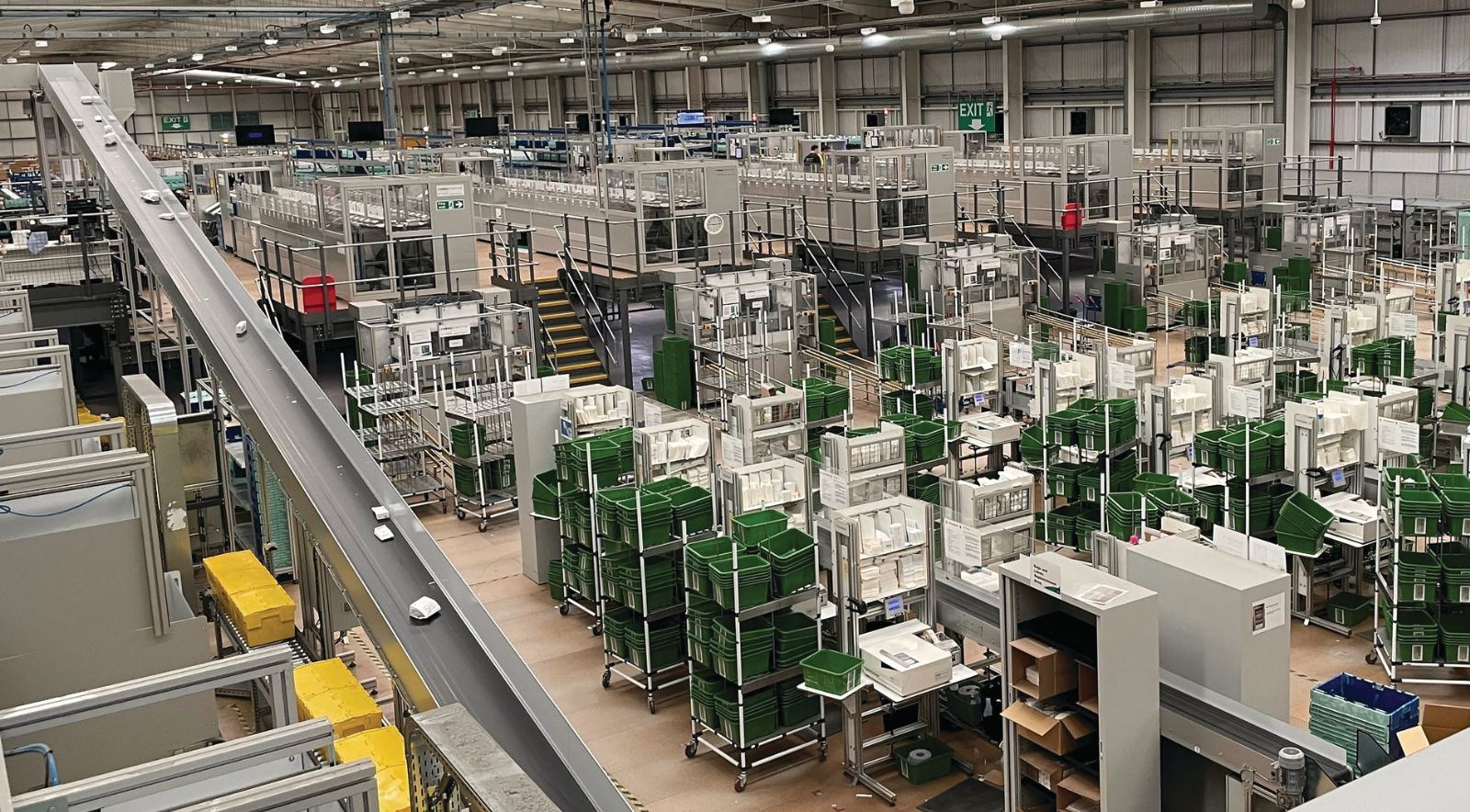
But replacement is not the only door, and it is not the most common one. High-volume cells can be added to a floor that is already running. Unit of Use can be added to an operation already filling vials, which is one of the most common projects we take on. If you have automation that is no longer keeping pace at the top of your volume, high-volume cells can take that tier while your existing equipment keeps handling medium volume.
Replace, augment, expand or upgrade. Central fill is not an all-or-nothing investment, and the first job is working out which of those you actually need.
What changes
Replace, augment, expand, upgrade
Replace
When a system is at end of life, unsupported, or no longer serving the operation it was built for, replacement is the honest answer. What replaces it is designed against your current volume and formulary rather than the assumptions the old system was built on.
Augment
Add capability the floor does not have. High-volume cells, Unit of Use or conveyance goes into an operation that is already running, extending what it can handle without changing what it already does well.
Expand
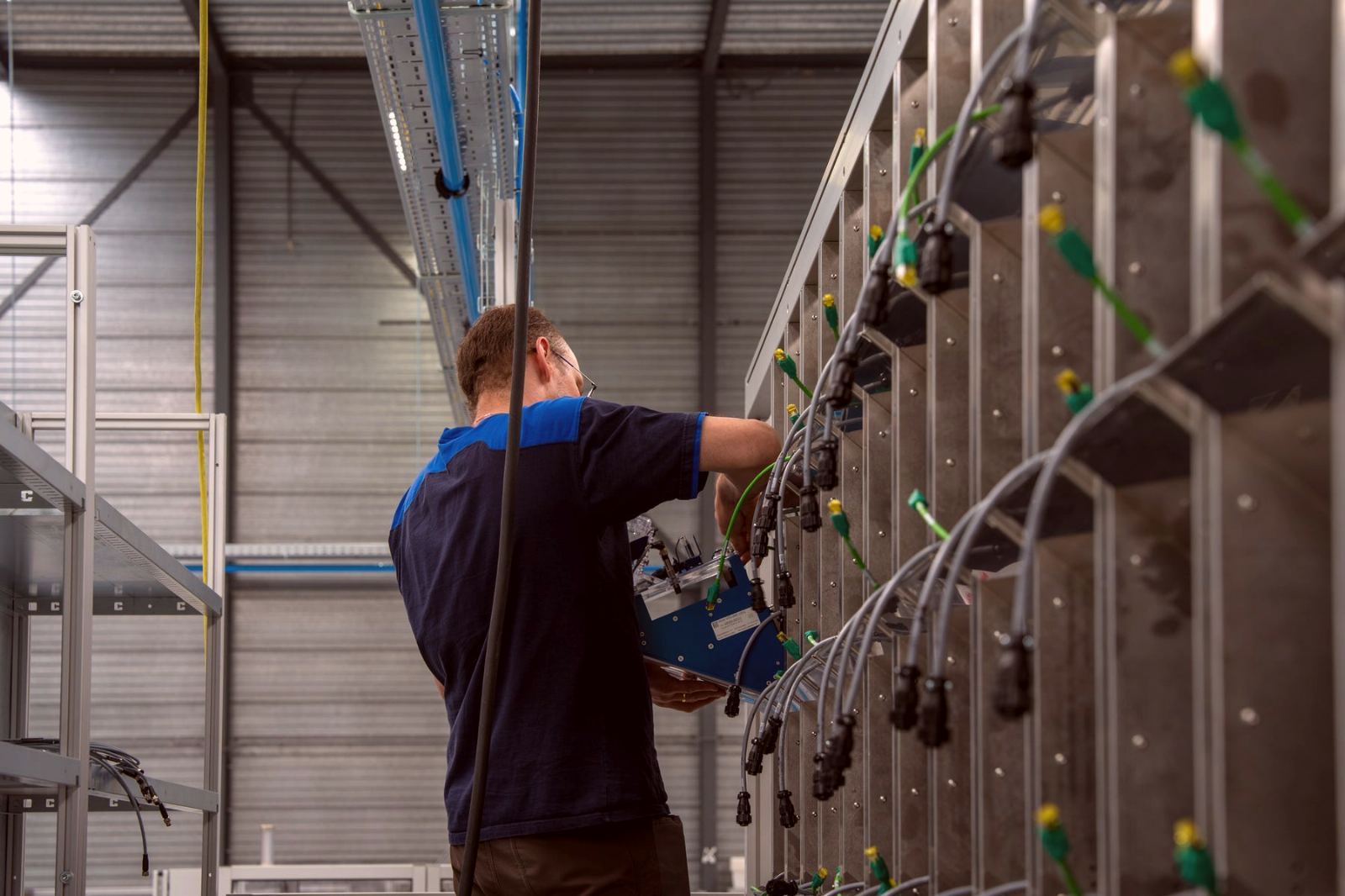
Add capacity to a system at its ceiling. Each HV Wall configures from 5 to 30 filling points, in sections of 20 cells, with up to 120 cells on a single conveyor. Cells are added as volume grows.
Upgrade
Replace aging equipment tier by tier rather than all at once. The gen 6 HV Cell is an upgrade to the engine rather than a new machine: same footprint, still delivering on accuracy, capacity and speed.
What this looks like
Four projects we take on regularly
Replacing a system at end of life
Automation that is no longer supported, no longer serviceable, or no longer sized for the volume it carries gets replaced outright. The replacement is designed against current volume and formulary, not against what the operation looked like when the old system went in.
Adding unit-of-use to a vial operation
An operation filling vials adds Unit of Use for packs, 30/60/90-day bottles, blisters, pens and inhalers, including cold chain. Both run on the same conveyed floor and merge into the same patient order.
Adding high-volume capacity at the top of the curve
Automation that no longer keeps pace at peak volume gets high-volume cells above it. Existing equipment continues handling medium volume, and the tiers work together rather than replacing one another.
Expanding a wall already in place
Filling points are added to an existing HV Wall, up to 30 per wall, without stopping the line.
Working with what you have
Agnostic toward the systems you already run.
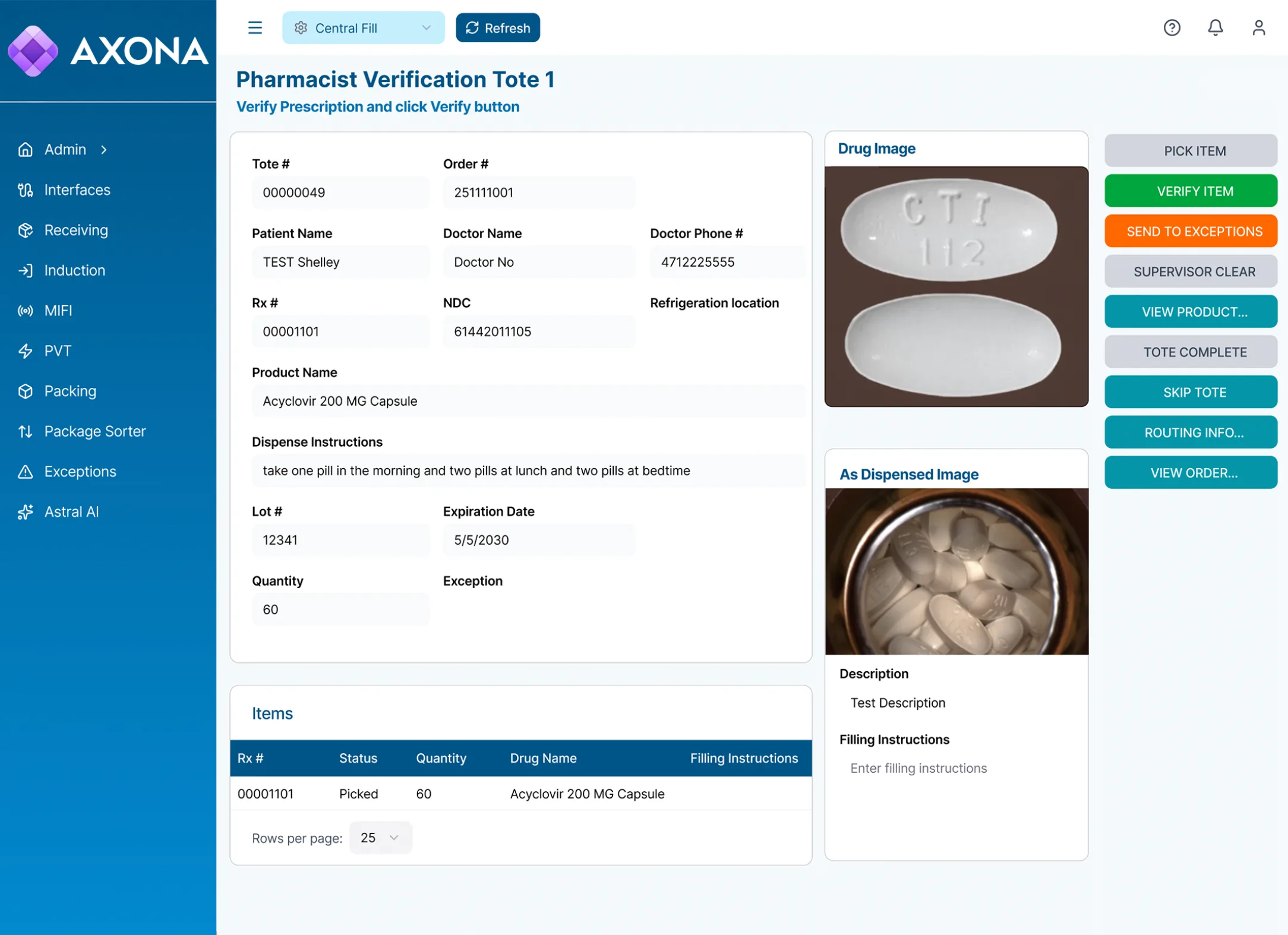
Axona is designed to work alongside the pharmacy management system, wholesaler connections and infrastructure you already have, rather than requiring you to replace them.
Axona integrates with EMR and pharmacy management systems, including Epic Willow. Integration is handled as part of standard implementation, alongside purchasing and financial reporting systems, and shipping and manifest systems. Real-time perpetual inventory and DSCSA traceability run inside the same system of record.
What it scales to
Room to grow into, not out of
Capacity is added as configuration rather than as another capital project, so the ceiling of an expansion is set by the architecture rather than by what was bought first.
Questions
Central fill expansion FAQ
Our system is at end of life. Is replacement the only option?
Sometimes it is. If the automation is unsupported, unserviceable, or sized for volume you passed years ago, replacing it is the honest answer. What matters is that the replacement is designed against your current operation rather than against the assumptions the old system was built on.
Do we have to replace our existing automation?
Not necessarily. If existing equipment is handling medium volume adequately, high-volume cells can be added above it to take the top of the curve. What gets replaced is what is no longer keeping pace, not everything.
Can capacity be added without shutting down the line?
Yes. Modular architecture expands capacity without interrupting the operation you are already running, and cells operate independently, so dispensing continues while any one of them is serviced.
We fill vials today. How hard is it to add unit-of-use?
It is one of the most common projects we take on. Unit of Use handles packaged doses in a modular cabinet, including cold chain in refrigerated rooms, and orders merge with vials into the same patient order on the same conveyed floor.
What is the difference between augmenting and upgrading?
Augmenting adds capability the floor does not have today. Upgrading replaces equipment that is aging or underperforming, tier by tier rather than all at once. Most projects involve some of both.
Let’s talk
Engineered for your operation
Capsa isn’t another pharmacy vendor, so every RoboPharma project starts with your workflow, not our catalog. Pharmacies count on Capsa every day. Bring us your toughest challenges to find out why.