
Station 01
Vial feeder and labeling
Induction
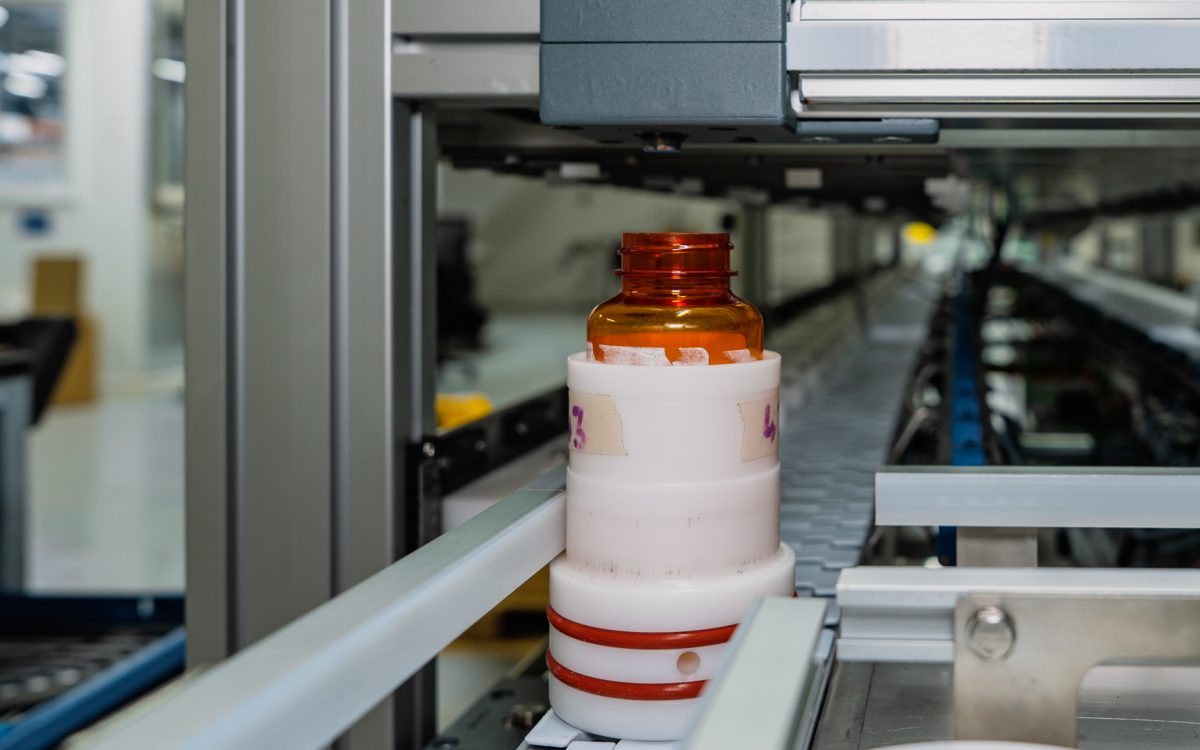
The line starts here. The system selects the right vial, applies the label and moves it onto the conveyor, staging the automated fill process that follows.
Hardware
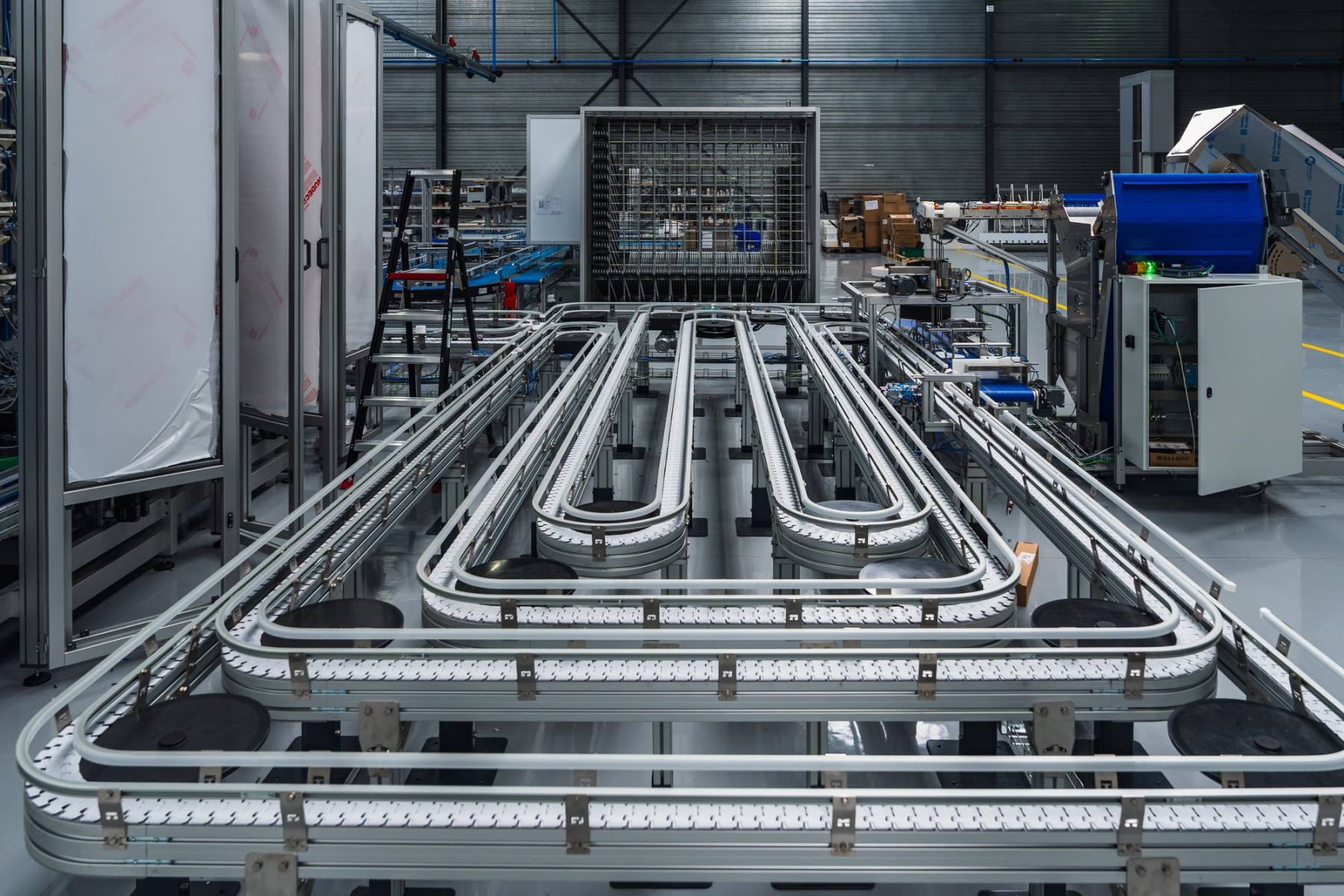
Vial filling and unit-of-use, ambient and refrigerated, conveyed as one system. Across Capsa’s installed base worldwide, this technology fills more than 550,000 prescriptions a day.
The portfolio
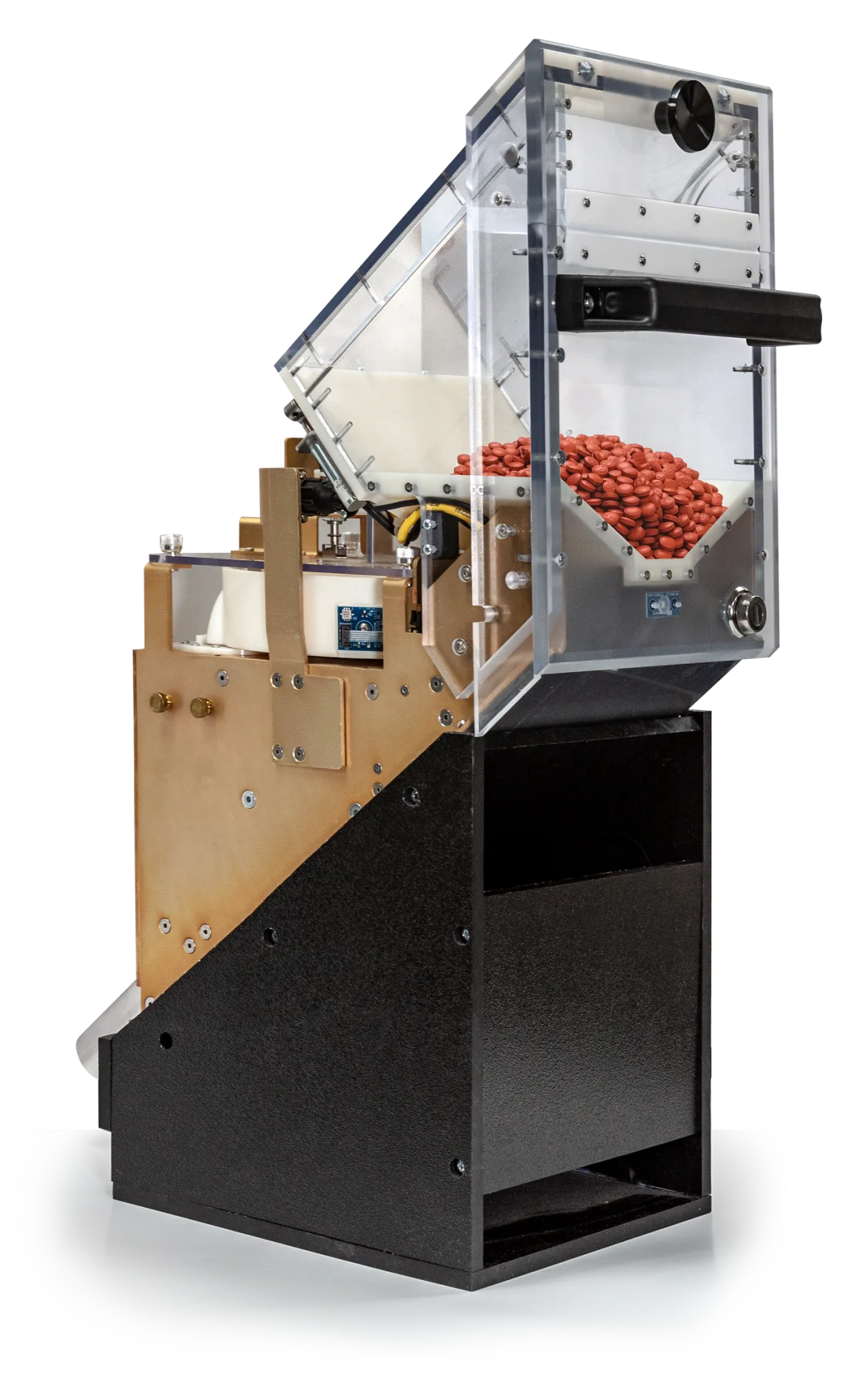
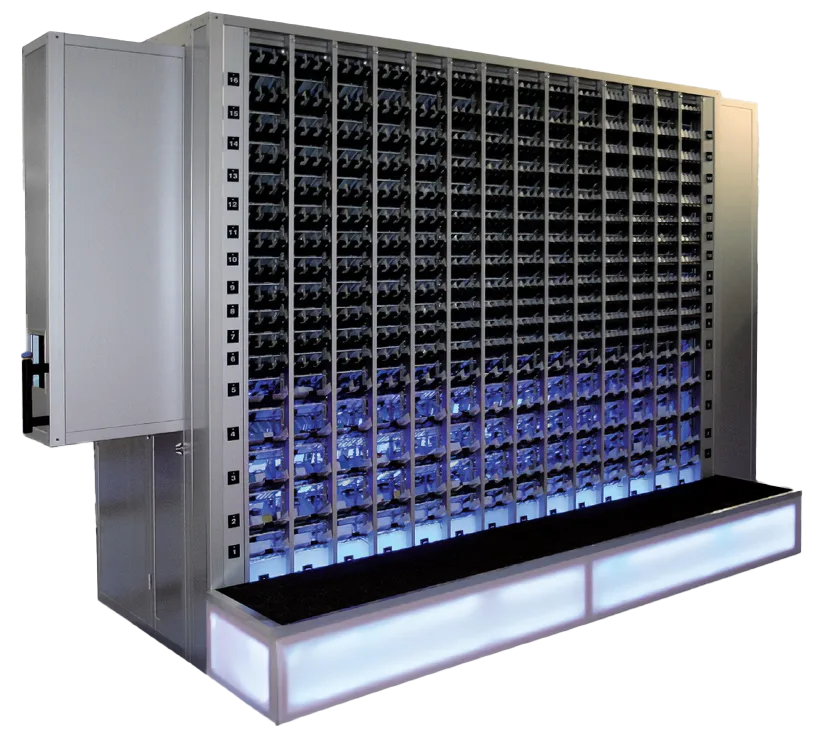
The cornerstone of high-volume central fill. The HV Wall is the system and the gen 6 HV Cell is the engine inside it, configured from 5 to 30 filling points and expanded by adding cells.
High-density unit-of-use fulfillment in a compact footprint. Modular automation for 30/60/90-day bottles, blisters, pens, and inhalers, engineered to run in refrigerated rooms.
Innovation Center
Walk a live configuration at the Capsa Innovation Center, or have us walk your floor plan with you.
Watch the system
Vial filling and unit-of-use are not parallel operations that meet at the end. They are workloads on one conveyed floor, orchestrated by Axona from order intake through shipment.
Video: the RoboPharma central fill system in operation
Walk the floor
From vial induction to sortation, engineered as one continuous line. Select a station to see what happens there.
Station 01
Induction
The line starts here. The system selects the right vial, applies the label and moves it onto the conveyor, staging the automated fill process that follows.
Station 02
High-volume oral solid dispensing
High volume runs on the HV Wall of gen 6 HV Cells. Each cell stages the order ahead of time, so when the vial arrives on the line, it is filled. Configure from 5 to 30 filling points and add cells as you grow.
Station 03
Swappable-canister dispensing
Medium-volume cells use small, swappable canisters, automating more SKUs in less space. Canisters change out quickly, so the line stays adaptable as demand shifts.
Station 04
Guided manual fill
For low-volume and specialty prescriptions, manual oversight is ideal. The KL1Plus manual fill station provides guided dispensing without slowing the workflow.
Station 05
Verification imaging
The pharmacist sees the order, NDC, lot and expiration alongside the reference and as-dispensed images. Inherited, remote and manual PV2, matched to state board regulations, and exceptions route away from the production line.
Station 06
Closure
Filled and verified vials are capped and sealed automatically before rejoining the order on the conveyor.
Station 07
Packaged medications
Packaged doses dispense from the Unit of Use system: packs, 30/60/90-day bottles, blisters, pens and inhalers, ambient and refrigerated, without re-tooling as the mix changes.
Station 08
DePucking & Order collation
Vials are automatically de-pucked and collated with everything else in the patient order, unit-of-use medications, vials and bottles, then transferred in a tote to the packaging system.
Station 09
Bagging and labeling
Complete orders are bagged and labeled automatically. Packing is scan-verified, with medication guides, package labels and scale readings.
Station 10
Final sortation
Finished orders sort automatically for final delivery, with prioritization by pack out or carrier cutoff.
Station 11
Control and monitoring
Every order, every station, every exception, in one system of record. The Axona control and monitoring station runs the line from order intake through shipment.
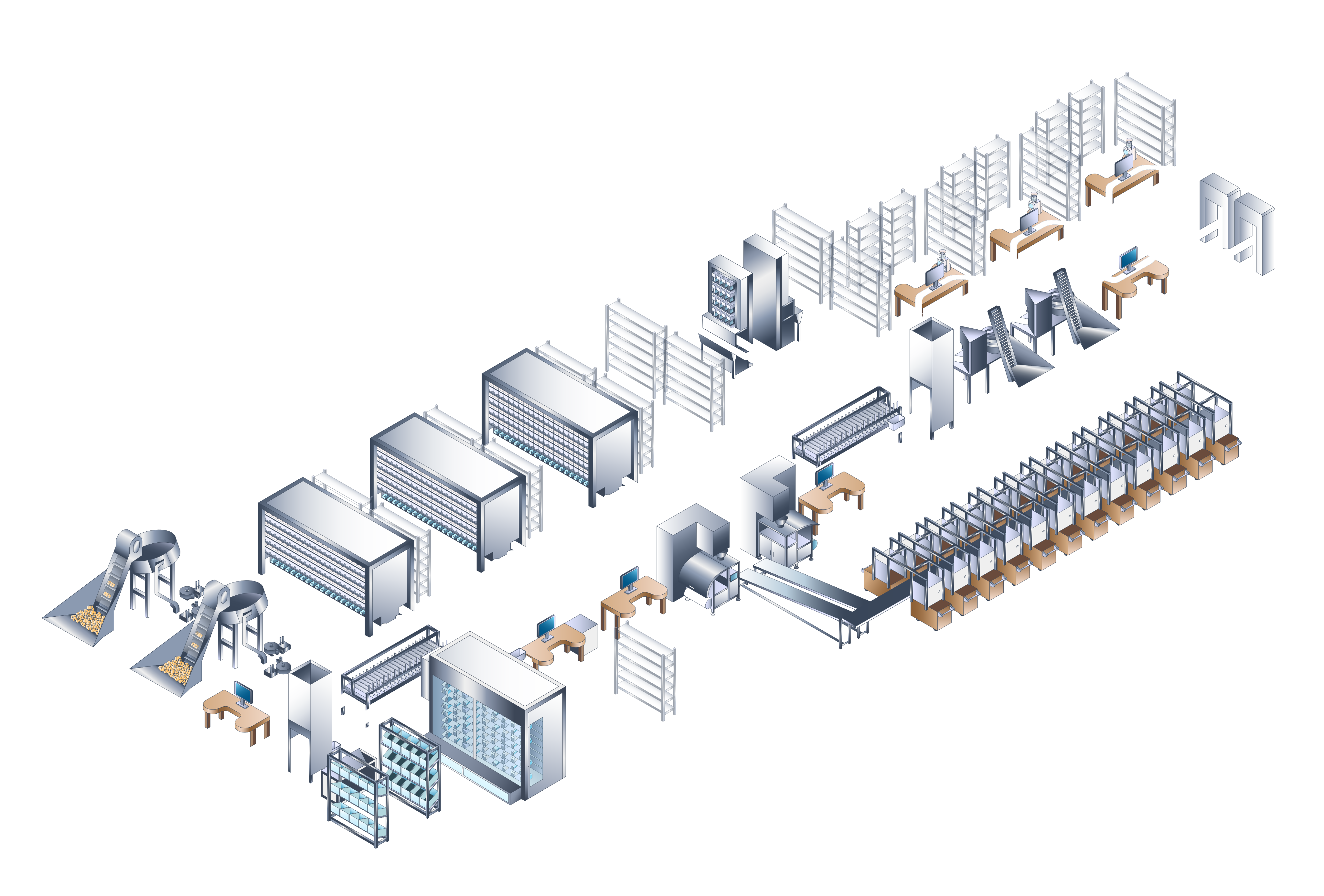
At scale
Filling is tiered along the way: high volume on the HV Wall, medium volume on cells with small swappable canisters, and low volume and specialty at the KL1Plus manual fill station.
Station guide
The line starts here. The system selects the right vial, applies the label and moves it onto the conveyor, staging the automated fill process that follows.
High volume runs on the HV Wall of gen 6 HV Cells. Each cell stages the order ahead of time, so when the vial arrives on the line, it is filled. Configure from 5 to 30 filling points and add cells as you grow.
Medium-volume cells use small, swappable canisters, automating more SKUs in less space. Canisters change out quickly, so the line stays adaptable as demand shifts.
For low-volume and specialty prescriptions, manual oversight is ideal. The KL1Plus manual fill station provides guided dispensing without slowing the workflow.
The pharmacist sees the order, NDC, lot and expiration alongside the reference and as-dispensed images. Inherited, remote and manual PV2, matched to state board regulations, and exceptions route away from the production line.
Filled and verified vials are capped and sealed automatically before rejoining the order on the conveyor.
Packaged doses dispense from the Unit of Use system: packs, 30/60/90-day bottles, blisters, pens and inhalers, ambient and refrigerated, without re-tooling as the mix changes.
Vials are automatically de-pucked and collated with everything else in the patient order, unit-of-use medications, vials and bottles, then transferred in a tote to the packaging system.
Complete orders are bagged and labeled automatically. Packing is scan-verified, with medication guides, package labels and scale readings.
Finished orders sort automatically for final delivery, with prioritization by pack out or carrier cutoff.
Every order, every station, every exception, in one system of record. The Axona control and monitoring station runs the line from order intake through shipment.
Questions
Central fill pharmacy automation is the robotics and software used in a centralized facility that fills prescriptions on behalf of many pharmacy locations. Orders route to a central site where automation handles counting, filling, labeling, inspection and sortation at high volume, then the finished prescription ships back to the store or direct to the patient.
RoboPharma is Capsa Healthcare’s central fill automation hardware: high-volume vial filling, unit-of-use dispensing, conveyance, inspection, packing and sortation. It is engineered for central fill and mail order rather than adapted from retail pharmacy equipment.
Axona is the software platform that runs the automation and manages the operation from order intake through shipment: inventory, order routing, workload balancing, pharmacist verification and DSCSA traceability.
Both use centralized, automated fulfillment. The difference is where the prescription goes. In central fill it ships back to a pharmacy where the patient collects it. In mail order it ships directly to the patient. RoboPharma and Axona support both on the same platform.
Axona integrates with EMR and pharmacy management systems, including Epic Willow. Integration is handled as part of standard implementation, alongside purchasing and financial reporting systems, and shipping and manifest systems.
Go deeper
In-depth brochures, system details and strategic articles to guide your central fill planning and automation design, drawn from Capsa’s experience in high-volume pharmacy environments.
Model your prescription volume and shift pattern to see the staff a purpose-built central fill line takes to operate, by role, with labor cost.
Run the numbers BrochureThe full hardware and platform overview, including how a line is configured and scaled.
Download PDF System infoHV Wall and gen 6 HV Cell specifications, throughput, footprint and replenishment.
Download PDF System infoUnit-of-use automation specifications, form factor support and cold chain handling.
Download PDF ArticleWhy centralization is accelerating and what it means for retail and health system operators.
Read the articleNext
Axona manages the operation from order intake through shipment.