
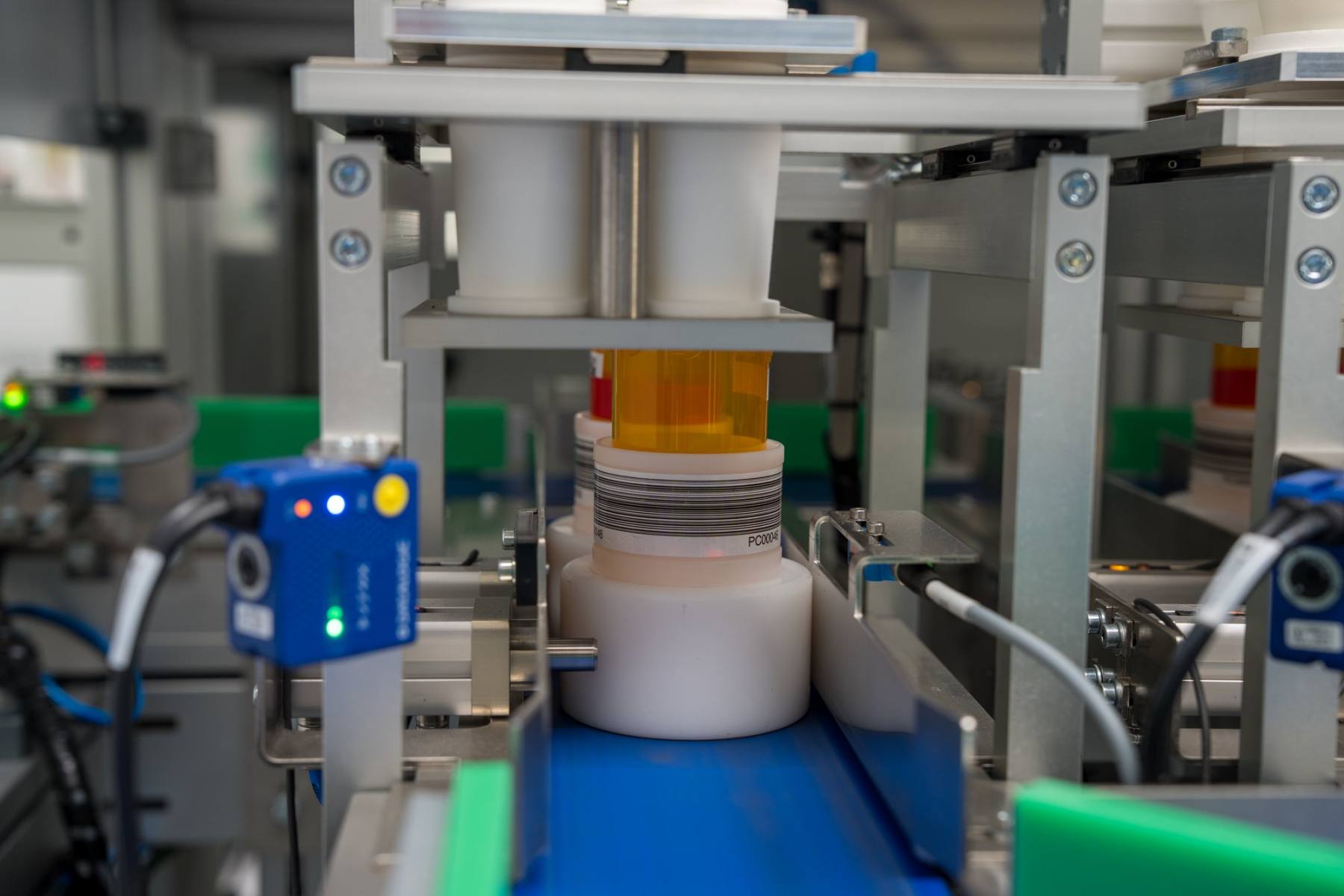
HardwareHigh-volume vial filling
One wall. Independent cells.
The cornerstone of high-volume central fill. Accuracy, storage capacity, and speed, purpose-built for fulfillment at scale rather than adapted from retail. Across Capsa’s installed base worldwide, this technology fills more than 450,000 oral solid prescriptions a day.
Why it matters
The HV Wall is the system. The gen 6 HV Cell is the engine inside it.
Prescription volume keeps climbing while the pharmacist pipeline tightens. The same team fills more scripts and captures that growth, with the resiliency to run without interruption.
Configure from 5 to 30 filling points and add cells as you grow. Each HV Cell stages the order ahead of time, so when the vial arrives on the line, it is filled.
- Up to 3.5 scripts per square foot
- Up to 50 percent less floor space
- Up to 50 percent greater labor efficiency
- Sections of 20 cells, 5 filling points each, up to 120 cells on a single conveyor
- 4000 CC hoppers
- In-facility self-calibration, no service call
- Inherited, remote, or manual PV2, depending on state board approval
Watch it run
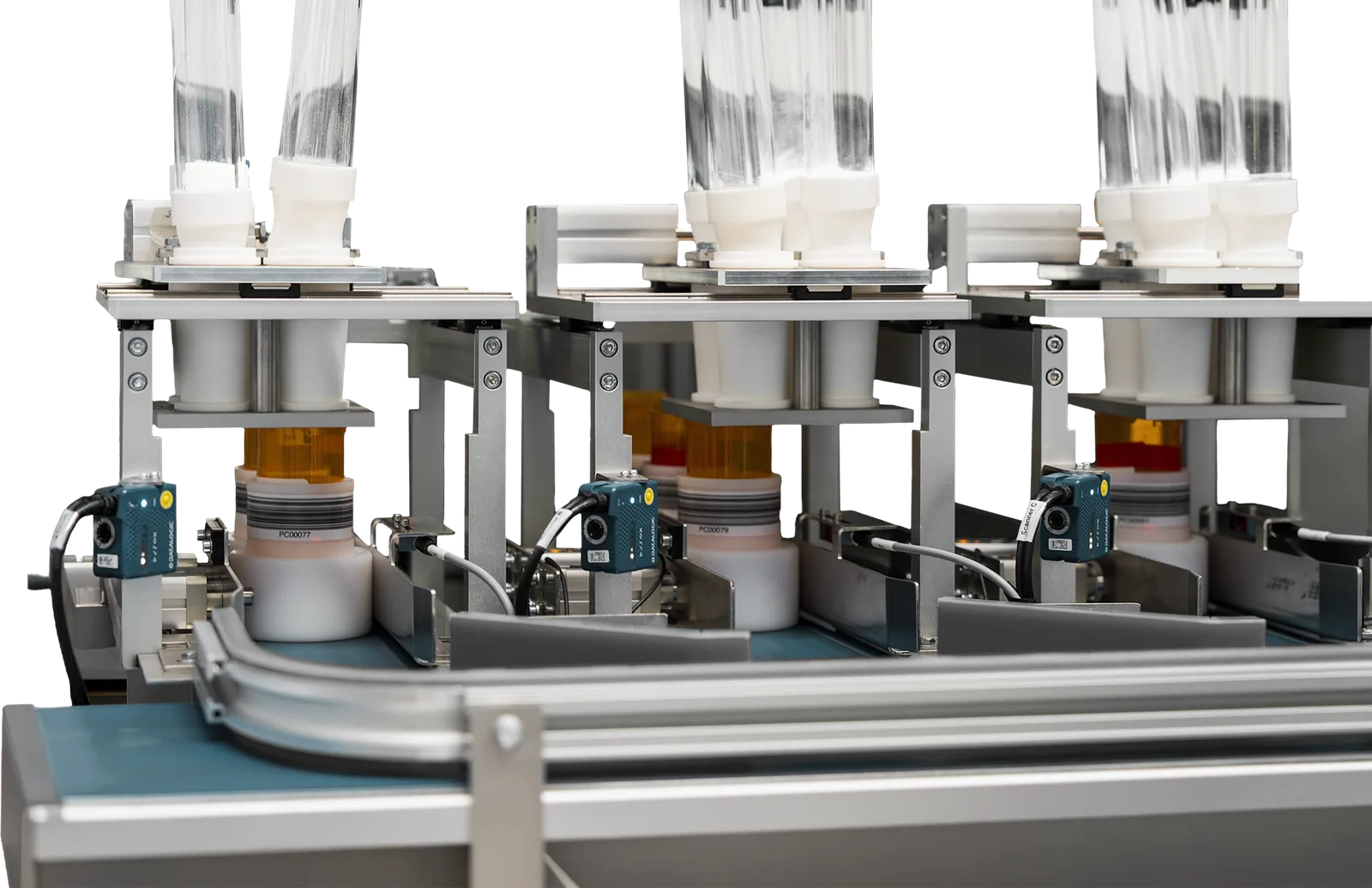
The wall in operation
One wall of independently running cells on the U-shaped conveyor. Each vial arrives at a cell that has already staged the order.
Video: the HV Wall filling on the central fill line
Scan the cell
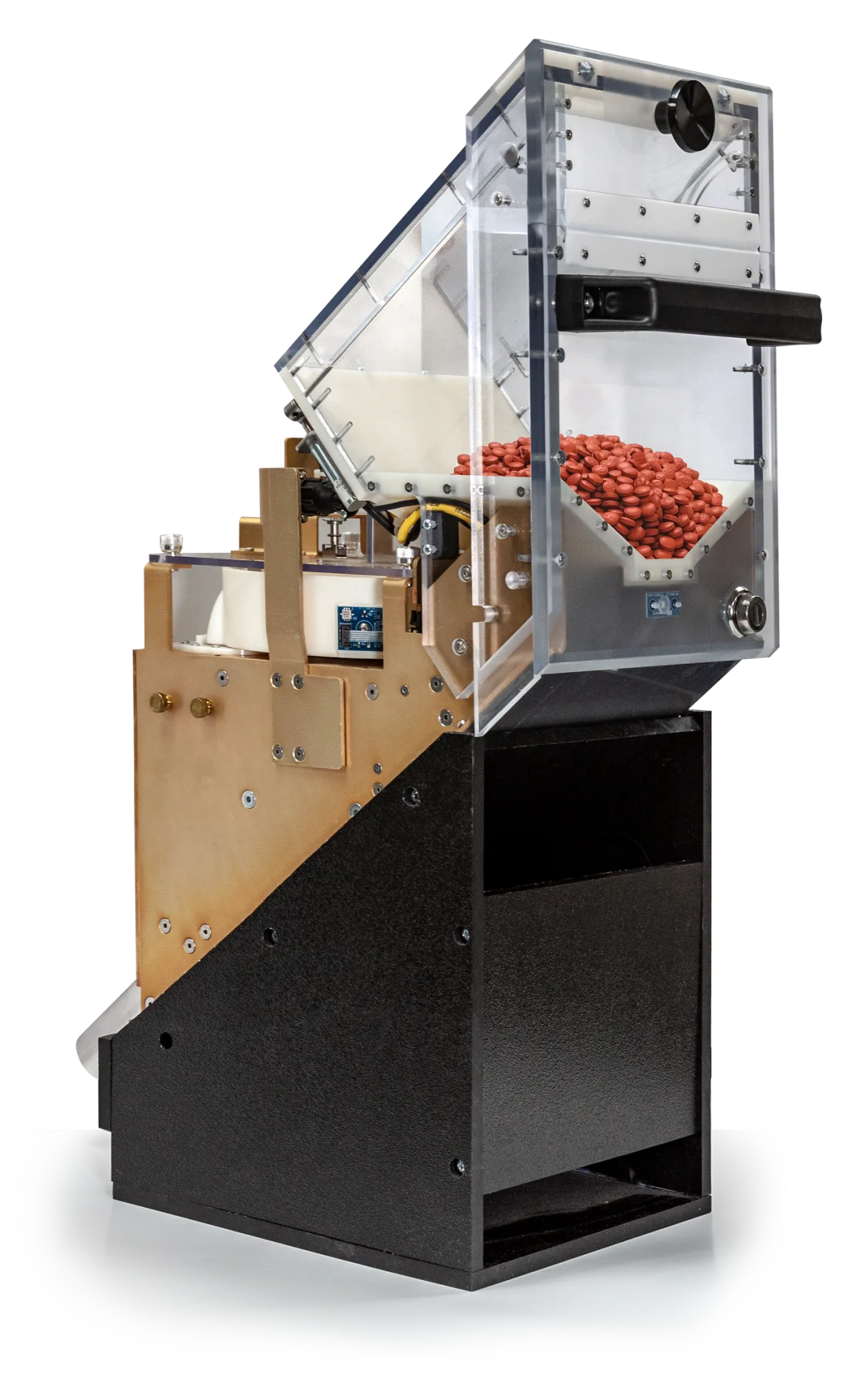
Canister-free replenishment starts with a scan that identifies the cell and its assigned medication.
Scan the med label
The scan verifies the match and supports inherited PV2 where allowed by the State Board of Pharmacy.
Reload while running
Reload while the rest of the system keeps running. Cells operate independently, so the line never waits.
Why coverage decides the labor math
The exception lane is where central fill economics break
Every prescription the automation cannot handle becomes a manual touch, and manual touches need a staffed lane running alongside the automated one. Automate a portion of your oral solids and you are still running two operations.
Canister-based systems calibrate to a single NDC, so coverage is a function of how many canisters have been bought and maintained, and the long tail of the formulary never gets automated. The HV Cell adapts to a wide range of pill sizes and shapes instead.
What it does
Six things the wall does differently
Throughput that scales
Each HV Wall configures from 5 to 30 filling points. Each cell stages the order ahead of time, so the vial is filled when it arrives on the line. Add cells to expand capacity as the operation grows.
Service without stopping the line
Cells operate independently, so dispensing continues while any one is serviced. Each is engineered for cleaning and service with minimal downtime.
Individual chutes
One medication per chute and access point, isolating each medication to prevent cross-contamination.
Broad dose coverage
Supports most oral solid doses on the market. Canister-based systems calibrate to a single NDC; the HV Cell adapts to accommodate a wide range of pill sizes and shapes.
Self-calibration
Pharmacy staff can recalibrate the cell on site. No service call, and no need to send it offsite.
Canister-free replenishment
Scan the cell, scan the med label, and reload while the rest of the system keeps running. The scan verifies the match and supports inherited PV2 where allowed by the State Board of Pharmacy.
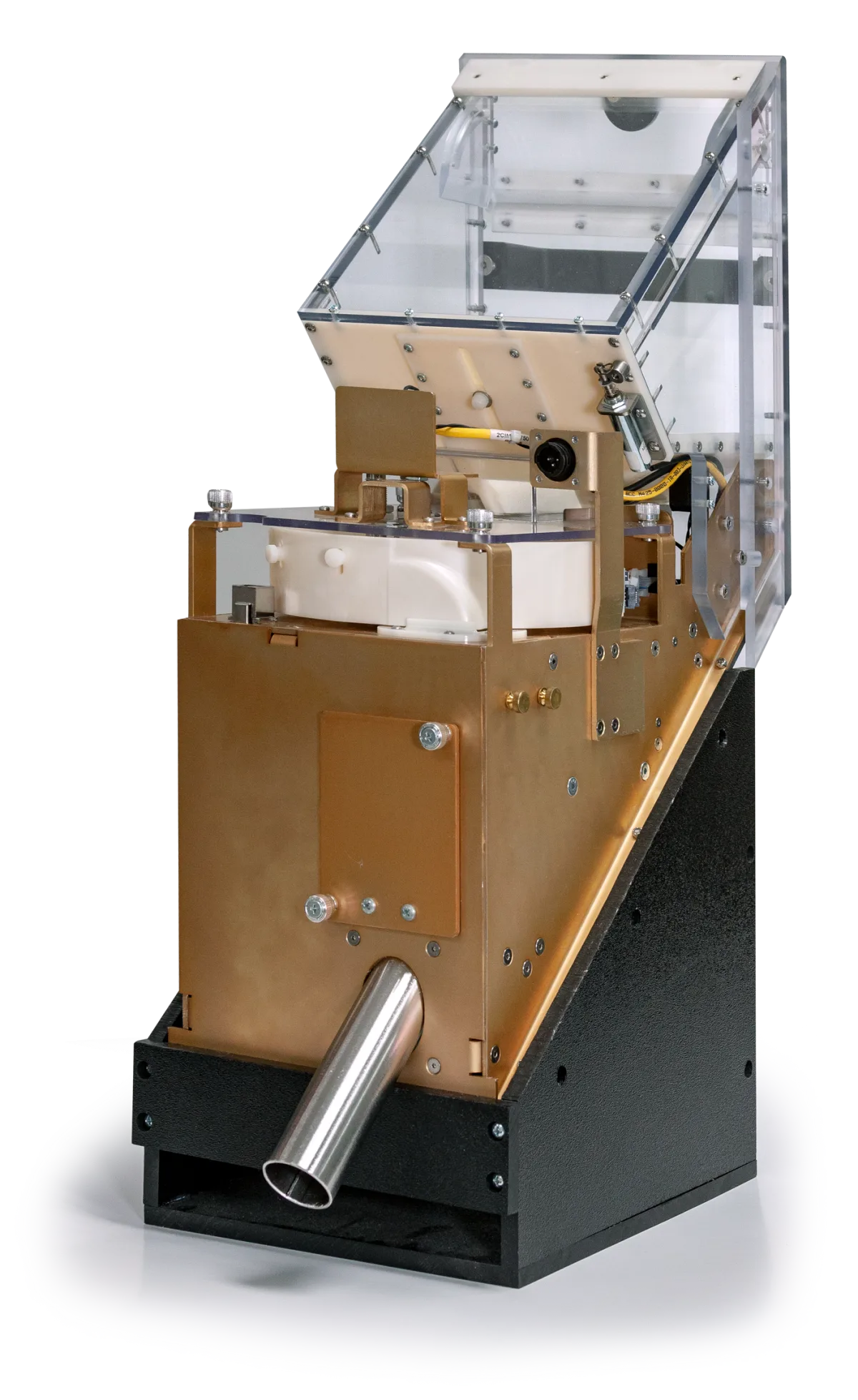
The gen 6 cell
An upgrade to the engine, not a new machine
Same footprint, still delivers on the three things that matter: accuracy, capacity, and speed.
Calibration in software
The gen 6 cell recalibrates in software, so a pharmacy team resets it in place rather than scheduling around a service visit.
Single adjustable wiper
One wiper design makes changing pills out faster and simpler for technicians.
Redesigned bowl
Improved pill singulation for more consistent feeding across dose shapes.
Sealed collimator
Keeps dust out of the housing, so the cell holds its accuracy longer between services.
Across the volume curve
Three tiers, one line
The HV Wall covers the top of the curve. Two more tiers keep the rest of the formulary off a fully manual lane.
Canisters are a tool at one tier here, not the architecture. The HV Cell is canister-free, which is what lets it cover most oral solid doses on the market. Medium-volume cells use small, swappable canisters where SKU density matters more, and they change out quickly rather than being calibrated to a single NDC for the life of the machine.
High volume
The HV Wall and the gen 6 HV Cell, canister-free and universal across most oral solid doses on the market. Roughly the top 80 percent of SKUs and dispensed volume.
Medium volume
Medium-volume cells use small, swappable canisters, automating more SKUs in less space. Canisters change out quickly, so the line stays adaptable as demand shifts.
Low volume and specialty
For low-volume and specialty prescriptions, manual oversight is ideal. The KL1Plus manual fill station provides guided dispensing without slowing the workflow.
Questions
High-volume vial filling FAQ
What is the RoboPharma HV Wall?
The HV Wall is the high-volume vial filling system at the core of RoboPharma central fill automation. It is built in sections of 20 gen 6 HV Cells, each with 5 filling points, and up to 6 sections, 120 cells in total, connect to a single U-shaped conveyor system. Cells operate independently, so dispensing continues while any one is serviced.
How is the HV Cell different from canister-based dispensing systems?
The HV Cell handles most oral solid doses on the market without re-tooling. Canister-based systems calibrate to a single NDC and have to be re-tooled whenever the formulary changes.
What is self-calibration on the gen 6 HV Cell?
The gen 6 cell recalibrates in software, so pharmacy staff can recalibrate the cell on site. No service call, and no need to send it offsite.
Which pharmacist verification (PV2) modes are supported?
Inherited, remote and manual PV2, matched to each State Board of Pharmacy’s requirements.
Next
See the platform that runs it.
Axona manages the operation from order intake through shipment.